
ABCDEs FOR MELANOMA
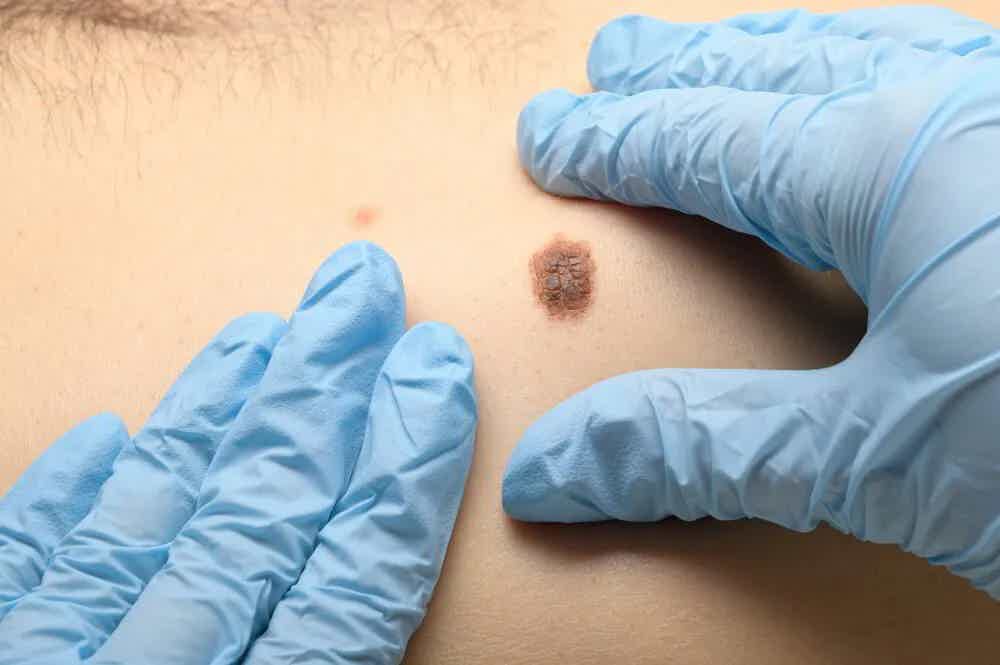
Melanoma is a type of skin cancer and is the seventh most common cancer in Canadians. Risk factors associated with development of melanoma include ultraviolet (UV) exposure from the sun, indoor tanning, having lots of moles (also called nevi) or strange-looking moles, having fair skin, having a family history of skin cancer, some genetic conditions, and having a weakened immune system.
One way in which you can be proactive in at-home screening for melanoma is by taking a look at your moles using the ABCDE rule (see below). Changes in size, shape, colour and other characteristics of a mole are some of the first warning signs of melanoma. The ABCDE rule is helpful for remembering which signs to look out for:
Asymmetry: The shape of one half of the mole is different from the other.
Border: The edges of the mole are ragged, notched, blurred, uneven or poorly defined.
Colour: Colours, which can be brown, black, grey, pink, tan, red, white or bluish vary within the mole.
Diameter: The mole is larger than 6 mm (bigger than the size of a pencil eraser) or has grown in size.
Evolution: The mole is changing in size, colour, shape, texture, or looks different from surrounding moles.
If you have a mole that has any of these characteristics, you should see your family doctor and get it tested.
Written by Dr. Dana Kolenich ND
References:
[2] https://www.aafp.org/afp/2012/0115/p161.html
[3] Parmar, G., Kaczor, T., & Boudreau, E. (2020). Textbook of naturopathic oncology: A desktop guide of integrative cancer care. Medicatrix Holdings Ltd.
Disclaimer: The information provided in this blog post is for general informational purposes only and should not be considered as a substitute for professional medical advice, diagnosis, or treatment. Always seek the advice of your physician or other qualified health provider with any questions you may have regarding a medical condition. Never disregard professional medical advice or delay in seeking it because of something you have read on this website.