
How to Increase GLP-1 Hormone Levels Naturally

Glucagon-like peptide-1 is an incretin hormone and plays an essential role in maintaining glucose homeostasis through the incretin effect. This effect involves stimulating insulin secretion in a glucose-dependent manner, suppressing glucagon, and delaying gastric emptying, which leads to reduced appetite and feelings of fullness. Beyond it’s effects on pancreatic hormone regulation, the GLP-1 hormone also slows gastric emptying and promotes feelings of fullness and satiety through direct signaling to the central nervous system. Additionally, it has been shown to restore pancreatic b-cell mass and insulin sensitivity.
“How can I support my body’s ability to make more GLP-1?” is a question we hear often in our clinic.
With the surge of use of GLP-1 medications in recent years, patients have become very familiar with the power of this peptide to facilitate weight loss. Glucagon-like-peptide-1 is made in our bodies primarily by specialized enteroendocrine L-cells located in the lining of our gut.
Research has exploded on the many effects of GLP-1 on our bodies and how this peptide facilitates weight loss. Below we will explain how GLP-1 is produced in the intestines and how you can support healthy levels naturally.
Here are the six areas of endogenous GLP-1 production in your digestive tract and tips to increase levels:
1. Intestinal epithelial cells can sense the concentration of glucose in the gut lumen and initiate the secretion of GLP-1 when the concentration reaches a certain level.
How you can help this
Ensure that your “gut lining” is healthy so your epithelial cells can respond appropriately. There are lots of considerations in having a healthy gut lining including eating a generally low inflammatory diet and avoiding food sensitivities unique to you. Ensuring a diet rich in a gut healing amino acid called L-glutamine is also important.
2. Dietary fibres are fermented to SCFAs (short chain fatty acids) by gut microbiota, which bind to GPR43 receptors, then promote the production of GLP-1.
You can...
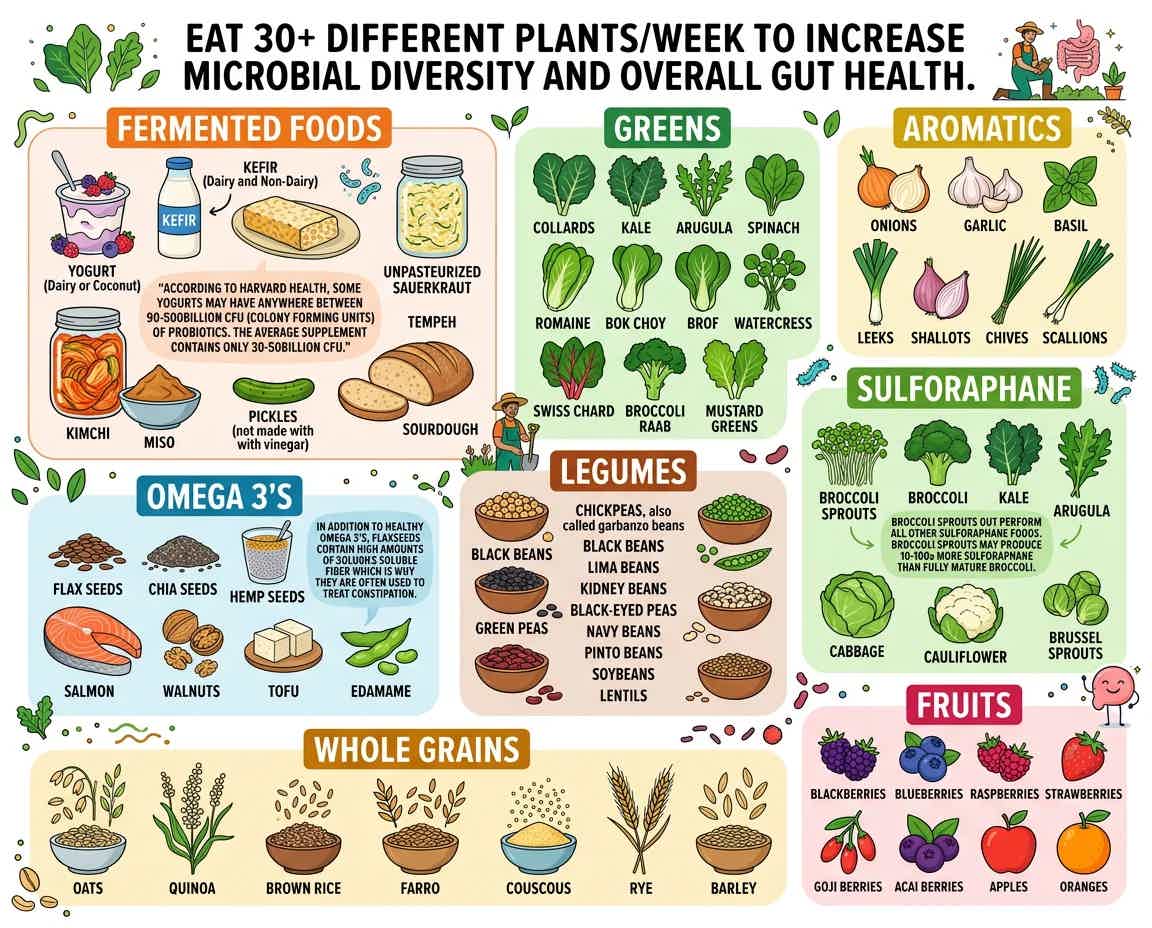
Support microbial diversity with prebiotics in your diet found in soluble fibres and fermented food as well as polyphenols which are found in colourful fruits and vegetables.
See the image below of foods to rotate to promote a diversified microbiome through diet.
3. Secondary bile acids bind to TGR5 and promote the production of GLP-1.
Primary Bile acids are transported from the liver to the intestinal lumen, metabolized by gut microbiota, and finally are transformed into secondary bile acids.
You can...
Support a diversified microbiome with a diversity of soluble fibre foods as suggested above. SCFAs feed the healthy microbes.
(Note that if you don’t have a gallbladder, you might benefit from some supplementation with ox bile.)
4. 2-OG (glycerol) binds to GLPR119 receptor of L cells(specialized enteroendocrine cells in the gut epithelium to promote the production of GLP-1. Dietary fats are digested into 2-OG (2-oleoyl glycerol) and fatty acids under the action of the intestinal bacteria.
You can...
Eat healthy fats and include coconut oil as great source of glycerol.
5. LPS (lipopolysaccharide) on the surface of Gram-negative bacteria can bind to TLR4 receptors of L cells and then promote the production of GLP-1 production.
While we don’t want to drive LPS production too much and create inflammation, supporting it with a gram negative bacteria like akkermansia can be helpful.
6. Tryptophan is a digestive biproduct/amino acid of dietary protein and is then further broken down in to indole. Indole promotes the production of GLP-1.
You can...
Include clean protein sources into each meal. Lean poultry, meat, nuts and seeds.
At Saskatoon Naturopathic Medicine, our six naturopathic doctors are always focused on individualized treatment plans through a comprehensive consultation. Sometimes we utilize functional testing like a USBiotek GI Advanced stool test and organic acid testing to assess all the areas of gastrointestinal and metabolic health indicated above. We may also recommend supplements to support the increased production of GLP-1.
If you are ready to make some changes to support your GLP-1 production naturally, utilizing the above recommendation above is a great start!
References:
Everand A, Cani P D. Gut Microbiota and GLP-1. Rev Endocr Metab Disord. 2014 Sep;15(3):189-96. doi: 10.1007/s11154-014-9288-6. PMID: 24789701
Zeng Y, Wu Y , Zhang Q, Xiao X Crosstalk between glucagon-like peptide 1 and gut microbiota in metabolic diseases. mBio. 2023 Dec 6;15(1):e02032-23. doi: 10.1128/mbio.02032-23PMCID: PMC10790698 PMID: 38055342
Abdalqadir N, Adeli K. GLP-1 and GLP-2 Orchestrate Intestinal Integrity, Gut Microbiota, and Immune System Crosstalk. Microorganisms. 2022 Oct 19;10(10):2061. doi: 10.3390/microorganisms10102061PMCID: PMC9610230 PMID: 36296337